Score-Based Multiplayer
Four players, one console, and the only rule that matters: outgun the other three.

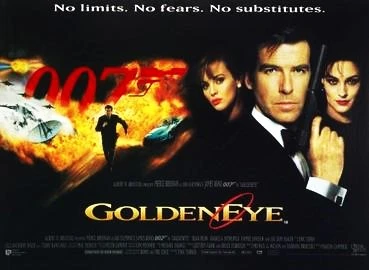
Score-Based Multiplayer is the competitive multiplayer framework at the heart of the GoldenEye: 007 franchise, most famously in the 1997 Nintendo 64 title developed by Rare. In these modes, players earn points by eliminating opponents, with the match concluding when a target kill count is reached or a time limit expires. The system pits the campaign's cast—James Bond, Oddjob, Killbar, and Zorin—against each other in fast-paced, weapon-driven gunfights across the game's various locations. The 2010 Wii remake, GoldenEye: 007, carried the score-based structure forward and expanded it with online play, but the N64 original remains the defining example: a four-player local experience where the entire social contract of the game was built around who could rack up the most eliminations before the clock ran out.
- Franchise
- GoldenEye: 007
- Original developer
- Rare
- Original publisher
- Nintendo
- Original platform
- Nintendo 64
- Max local players
- 4
- Scoring method
- Elimination-based (kills = points)
- Playable characters
- James Bond, Oddjob, Killbar, Zorin
Lore & Background
In the GoldenEye campaign, you fight alongside or against a tight cast: the MI6 agent Bond, the enigmatic Oddjob, the mercenary Killbar, and the villainous Zorin. The multiplayer modes strip away the narrative scaffolding and let those same characters turn on one another. There is no story here, no briefing, no cutscene—just a lobby screen, a map pick, a weapon loadout, and the countdown. Rare designed the multiplayer to feel like a natural extension of the single-player gunplay. The same hit-detection, the same weapon handling, the same level geometry that carried the campaign now became an arena. A corridor in the Facility that was a tense stealth passage in the story becomes a choke point where two players duel at close range with shotguns. The Jungle's verticality, built for platforming puzzles, becomes a sniper's paradise. The social ritual around these matches was as important as the mechanics. Four friends gathered around a TV, each grabbing a controller, arguing over who got Bond (the 'best' character) and who was stuck with Zorin. The score-based structure meant every kill was visible, every point felt earned, and the final tally settled arguments with cold, numeric authority.
In Their Own Story
The TV flickers to the character-select screen. Four controllers, four hands, four egos. Marcus grabs Bond before anyone can blink. Lena takes Killbar, smirking. Dev is stuck with Oddjob and mutters something about 'the hat.' You take Zorin, because you like the sniper rifle and you like being the one nobody expects. The map loads. Facility. Concrete corridors, a central atrium, the hum of fluorescent lights. The countdown hits zero and the first shot cracks through the speaker like a whip. Marcus is already moving, M4 barking in short bursts. You're on the catwalk, AWP steady, watching the atrium below. Lena rounds the corner with a shotgun and you drop her in one clean headshot. The score flashes. 1-0. The next three minutes are a blur of reloads, close-quarters scrambles, and Dev's Oddjob hat somehow deflecting a bullet that should have ended him. You win 12 to 9. Marcus demands a rematch. You all know you'll play another four rounds before anyone touches a controller again.
Reader's Guide
Score-Based Multiplayer in GoldenEye is straightforward: eliminate opponents to earn points, and the match ends when someone hits the kill target or the timer expires. There is no objective to capture, no bomb to defuse—just a running tally of who shot whom. Before the match, players select a character (Bond, Oddjob, Killbar, or Zorin), a starting weapon, and a map. Health is set to a fixed value (commonly 100), and the number of kills needed to win is adjustable. In Free-For-All, every player is an independent target; in Team Deathmatch, eliminations are credited to the team, and the first team to reach the kill quota takes the round. What makes the system work is the tight feedback loop. Every kill is a visible, audible, immediate point on the scoreboard. There is no ambiguity, no hidden scoring. You either hit the kill or you didn't, and the number goes up or it stays put. This clarity is what made the mode so replayable: the stakes are always legible, the skill ceiling is the player's aim and map knowledge, and the social pressure of a public score makes every single engagement matter. The mode matters because it turned a single-player stealth-action game into a social event. No online infrastructure, no matchmaking, no lobbies—just four controllers and a shared screen. The score was the only referee, and it never lied.
Did You Know?
- The same four characters you face as enemies or allies in the GoldenEye: 007 (N64) campaign are the exact roster available in multiplayer, meaning you can play as the villain Zorin and shoot the version of Bond you just
- GoldenEye: 007 (N64) supported up to four simultaneous local players on a single console, which was a notable party-game feature for the mid-1990s console era.
- The 2010 Wii remake, also titled GoldenEye: 007, retained the score-based kill modes and added online multiplayer, a first for the franchise.
- Map selection in the N64 original let players choose from several of the campaign's locations, turning story levels like the Facility and the Jungle into competitive arenas.
More in Gameplay & Mechanics
Elsewhere in the GoldenEye universe
Spotted an error? Know more?
This is a living reference — every entry is fact-audited, and reader corrections feed straight into our audit queue. Suggest an edit · See this site's audit record